
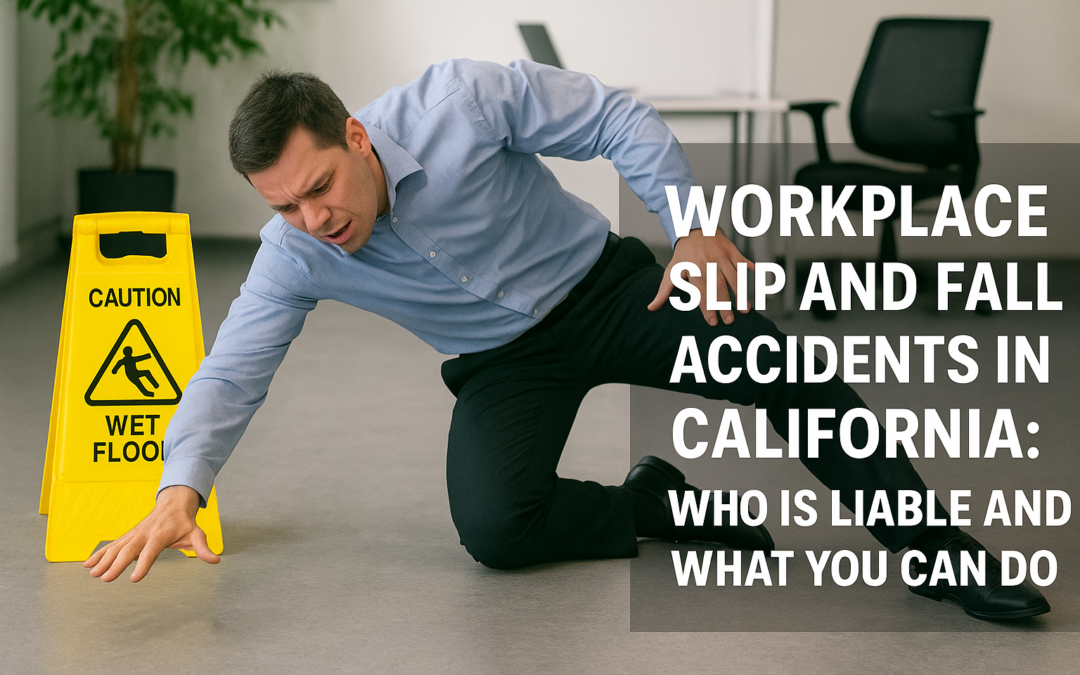
If you are injured in a workplace slip and fall in California, you may be entitled to workers’ compensation benefits and, in some cases, additional compensation from a negligent third party.
This article explains how these accidents happen, who may be responsible, and what steps protect your rights.
Common Causes of Workplace Slip and Fall Accidents
Slip and fall accidents are among the most common work injuries in California. They often occur due to:
Wet or recently cleaned floors
Uneven surfaces or loose flooring
Poor lighting
Spilled liquids or debris
Broken stairs or handrails
Unsafe ladders or scaffolding
These hazards are frequently seen in construction sites, warehouses, restaurants, hospitals, and office buildings.
Workers’ Compensation Coverage After a Slip and Fall
If your slip and fall happened while performing your job duties, workers’ compensation generally applies.
Benefits May Include:
Medical treatment related to the injury
Temporary disability payments if you miss work
Permanent disability benefits if the injury causes lasting impairment
Supplemental job displacement benefits if you cannot return to the same job
Workers’ compensation is a no fault system, meaning you do not need to prove your employer was negligent.
Reference:
California Labor Code §3600
https://leginfo.legislature.ca.gov
When a Third Party May Be Liable
In some cases, someone other than your employer may be legally responsible. This can happen when:
A property owner failed to maintain safe conditions
A cleaning or maintenance company created a hazard
Defective flooring, stairs, or equipment caused the fall
These situations may allow a third party personal injury claim, which is separate from workers’ compensation.
This type of claim may allow recovery for:
Pain and suffering
Full lost wages
Future earning capacity
Loss of enjoyment of life
Common Injuries From Workplace Slip and Falls
Slip and fall accidents can cause serious injuries, including:
Head and brain injuries
Back and spinal cord injuries
Broken hips, wrists, and ankles
Knee and shoulder damage
Soft tissue injuries
Even falls that seem minor can result in long term complications.
Steps to Take After a Workplace Slip and Fall
Report the injury to your employer immediately
Request and complete a DWC-1 claim form
Seek medical treatment as soon as possible
Take photos of the hazardous condition if possible
Get names and contact information of witnesses
Keep copies of all reports and medical records
Delays in reporting or treatment can weaken your claim.
Common Mistakes to Avoid
Assuming the injury is too minor to report
Returning to work before being medically cleared
Giving recorded statements without understanding your rights
Missing deadlines for forms or benefits
These mistakes often lead to delayed or denied benefits.
Why These Cases Can Be More Complex Than They Appear
Slip and fall cases often involve disputes about:
Whether the injury happened at work
Whether a hazard existed
Who controlled the area where the fall occurred
Whether safety regulations were followed
Early investigation and documentation are critical.
Final Thought
A workplace slip and fall can disrupt your health, income, and future ability to work. Understanding whether your case involves only workers’ compensation or also a third party claim can make a significant difference in the compensation available to you.